
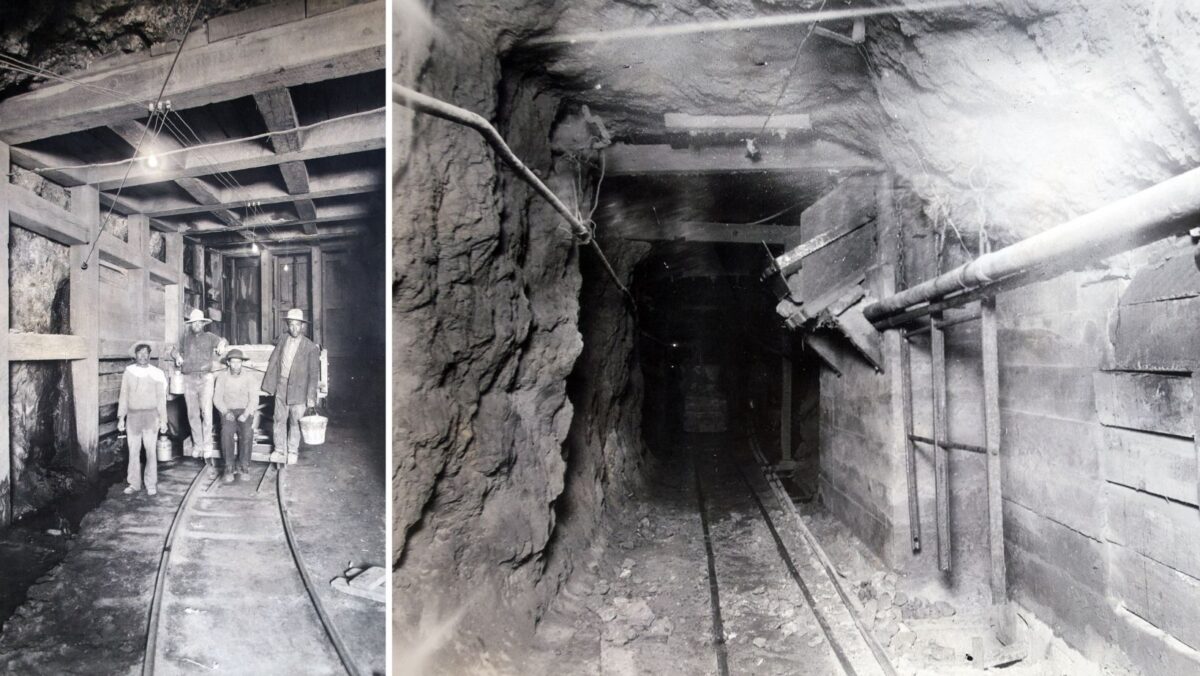
Checking Supplies Underground at Pilares Mine
12 de octubre de 2026
By E. Leland
A Smoothly Working Plan That Keeps Careful Control Over the Use Materials
(1925) – All mine supplies at the Pilares mine of the Moctezuma Copper Co., in Nacozari, Sonora, are purchased by the supply department. The local supply manager at the mine is directly responsible to the Nacozari supply department manager, and he, in turn, is responsible to the manager of the company. It is the duty of the supply department to keep on hand, and maintain at all times, an adequate supply of material, such as mine timber, powder, fuse, caps, carbide, fuel oil, drill steel, mine rails, pipe and pipe fittings, drilling machine repair parts, air and water hose, shovels, wheelbarrows, picks, hammers, and other material.
Through the various department heads and the mine superintendent, the supply department is kept advised of future plans in order that supply department stocks may be maintained at the proper amount, and everyone co-operates to guard against overstocking. The supply department operates without profit or loss, hence it is up to the mine department at all times to use the material in the warehouse. No drastic changes in operations that would cause any class of supply stock to become obsolete are considered until the stock of this commodity has been depleted. For instance, should the mine department decide to change the size or design of the shovels, or wheelbarrows, the superintendent would so advise the supply department and request that the next order placed for these articles conform with the new size or kind desired.
All special orders that cover new equipment, repairs for equipment, special material for experimental testing purposes, are ordered special material order blank which either signed the mine superintendent. The mine department takes the responsibility these orders and understood that material ordered will not into supply department stock, but will charged out and put into service its arrival.
To guard against the over-use supplies and fix the responsibility for their use, the mine superintendent furnishes the supply department with list department heads authorized sign requisitions for supplies.
Further to check the use of underground supplies and give the mine department the best supply service possible, an underground supply department has been organized, the operation of which will be described in detail.
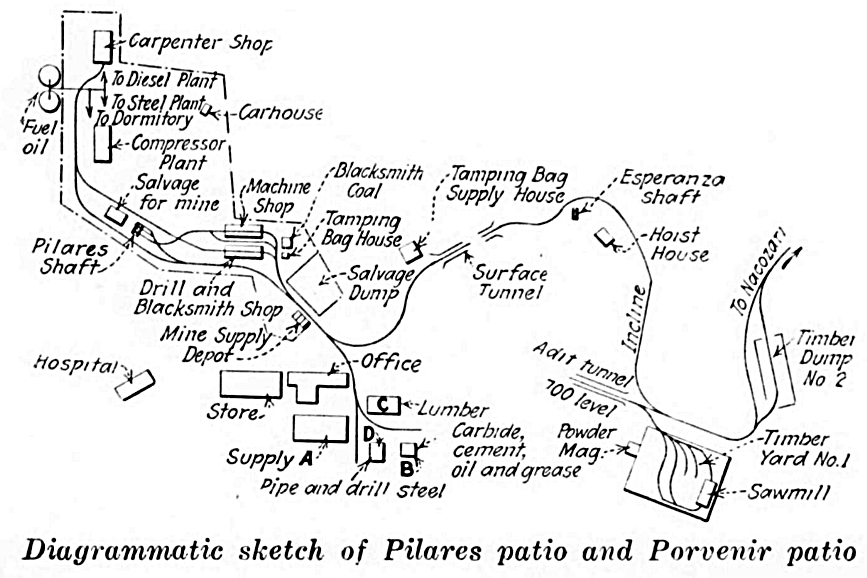
The accompanying sketches of the Pilares and Porvenir patios show the general arrangement of the supply warehouses, yards, and mine plant, and the accompanying flow sheets explain, in a general way, the flow of material from the time of its arrival in Nacozari until it is used in the mine.
The underground supply department takes care of and handles part of this flow of material from the time it is drawn from the supply department stock until it is placed on the mine level stations for delivery to the tool rooms and underground supply stations. From that time until the supplies are placed in the hands of the workmen who are to use them, the flow of material is in the hands of the division foreman.
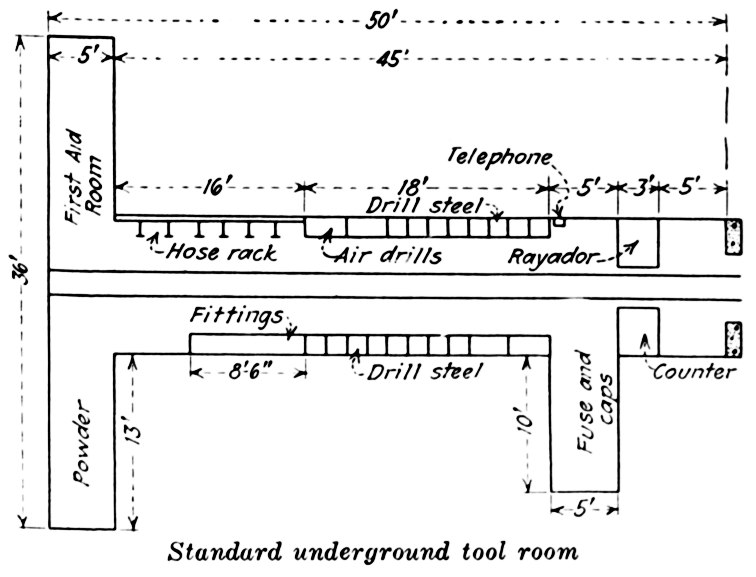
Underground supply stations standard design, centrally located, are maintained each operating level. These tool rooms contain stock all material used mining operations, excepting pipe, rails, anid timber. Special storage places are provided for extra pipe and rails the levels, and the 300, 400, 500 and 600 levels timber stations have been cut near the New Pilares shaft for timber storage. Eventually, similar stations will provided for the lower levels.
The personnel the underground supply department consists supply boss, assistant supply boss, warehouse man, surface nipper, tamping-bag man and carbide attendant.
The mine supply boss, who the head this department, directly responsible the general mine foreman. All orders for mine supplies are placed with the supply department by the mine supply boss. He also places with the master mechanic all orders originating within the mine department and “okayed” by the general mine foreman for material or equipment to be made or repaired by the mechanical department. In this way the mechanical department is able to plan its work and arrange the sequence of jobs according to their relative importance.
The chief duty of the underground supply boss, in addition to maintaining an efficient organization, is to determine the amount of extra material needed for each level and keep this stock replenished, for no matter how small the article, if not on hand when needed, it may cause a serious loss to the company. On the other hand, it is not a wise policy to have an oversupply of material on any level, as that means extra money tied up in material not in use.
The supply boss is not responsible for the use or issue of material from, or the operation of, the various tool rooms. However, he does act in an advisory capacity and notifies the division foreman of any over-issue or over-use of supplies, or any laxity on the part of the tool-room man and nipper.
The supply boss roughly checks the timber each day and writes orders on the supply department for timber needed. It is also necessary to see that a sufficient supply of material is kept on hand on the surface to supply the demands of the mine.
Another important duty of the supply boss is to see that all old material in the mine is salvaged and sent to the shop for repair and again returned to the mine for service; also that any material out of service in the mine is moved to some other part of the mine where it can be used. The supply boss also compiles a monthly statement showing the total issue of supplies through each tool room. This information is turned over to the general foreman and mine superintendent, who are in this way kept informed as to the use of supplies by the various mine foremen.
The assistant supply boss closely supervises the arranging of supplies and their distribution, checks material ready in the shops, takes charge of the powder car and makes the proper distribution of powder to each level, and assists in the salvage work and the moving of material from one part of the mine to another. He also checks the tool rooms in the mine to determine if they have a sufficient supply of all articles on hand and to see that the powder and fuse accounts balance. When cars that have been sent out for repairs are ready, the assistant supply boss lowers them to the respective levels from which they came.
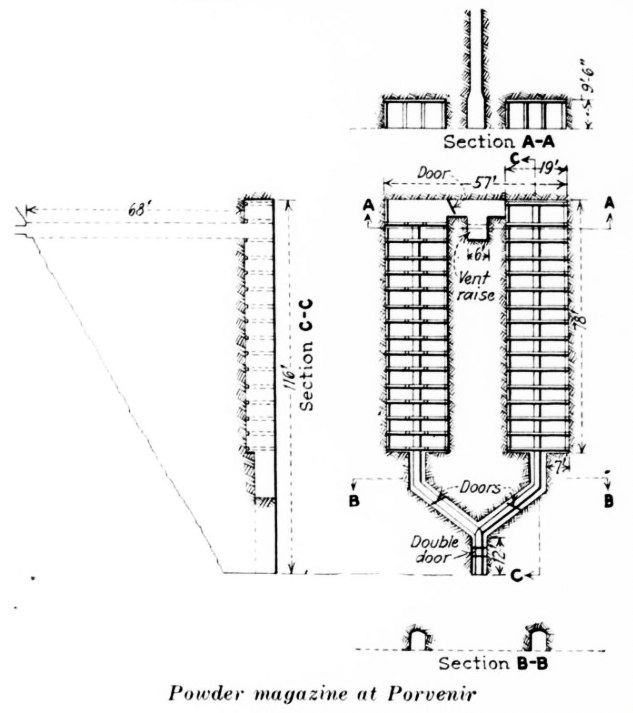
It is the duty of the man in the small warehouse to make a list each morning of material requested on the “requisitions for material” forms that were made out the previous day by the tool-room timekeepers and turn it into the supply boss, write requisitions for stock material, and arrange the material for distribution to the different levels in the mine. This material is put into empty carbide cans and the level to which it is going is marked on the cans. Fuse and caps are placed in lined carbide cans with hinged tops, in order that they may be locked and sent to the various levels. In the afternoon the warehouseman assists the fuse cutter and turns into the office a daily report of the fuse and caps sent into the mine, in order that the accounts of the various levels may be checked.
Articles to be sharpened or repaired are sent from the mine to the warehouse. From there they are taken to the shops and later returned for redistribution in the mine.
Each morning the surface nipper takes the machines and hose that have been sent out from the mine on night shift and delivers them to the drill-repair shop. He then takes any machines or hose that may be ready other came. In the event of new work commencing and more steel being needed, the foreman will advise the supply department and the required number of pieces of extra steel will be issued. It is the duty of the underground supply department to see that the steel is properly exchanged and sent down in the morning immediately after the lowering of the shift.
At present there are two systems in vogue for distributing the steel underground; one, where the miner brings dull steel to the tool room and exchanges it, piece for piece; the other, where the tool nipper takes the sharp steel to each working place and delivers it directly to the miner. The latter has the advantage in that it saves the time of the miner going from the working place to the tool room, and also saves the time he loses conversing with the friends he meets on the way. The first has the advantage over the second because all the dull steel is not returned to the tool room, whereas in the first case it must be brought in for exchange in order to obtain sharp steel. It is entirely optional with the foreman which system is used.
After the shift has been lowered in the morning the large cage is turned over to the supply department. Steel is sent down first, then machines and hose, followed by supplies and tamping material. In the afternoon any articles such as repaired cars are lowered and material brought to the surface for repairs.
Photos: Pilares de Nacozari mine tunnels – Phelps Dodge Collection – Freeport-McMoRan, Inc.
Published on Engineering and Mining Journal
New York, New York, August 1, 1925
Vol. 120, No. 5
About the author:
E. Leland was mine superindendent at the Moctezuma Copper Company, Pilares de Nacozari, Sonora Mexico in 1925.
© All Rights Reserved